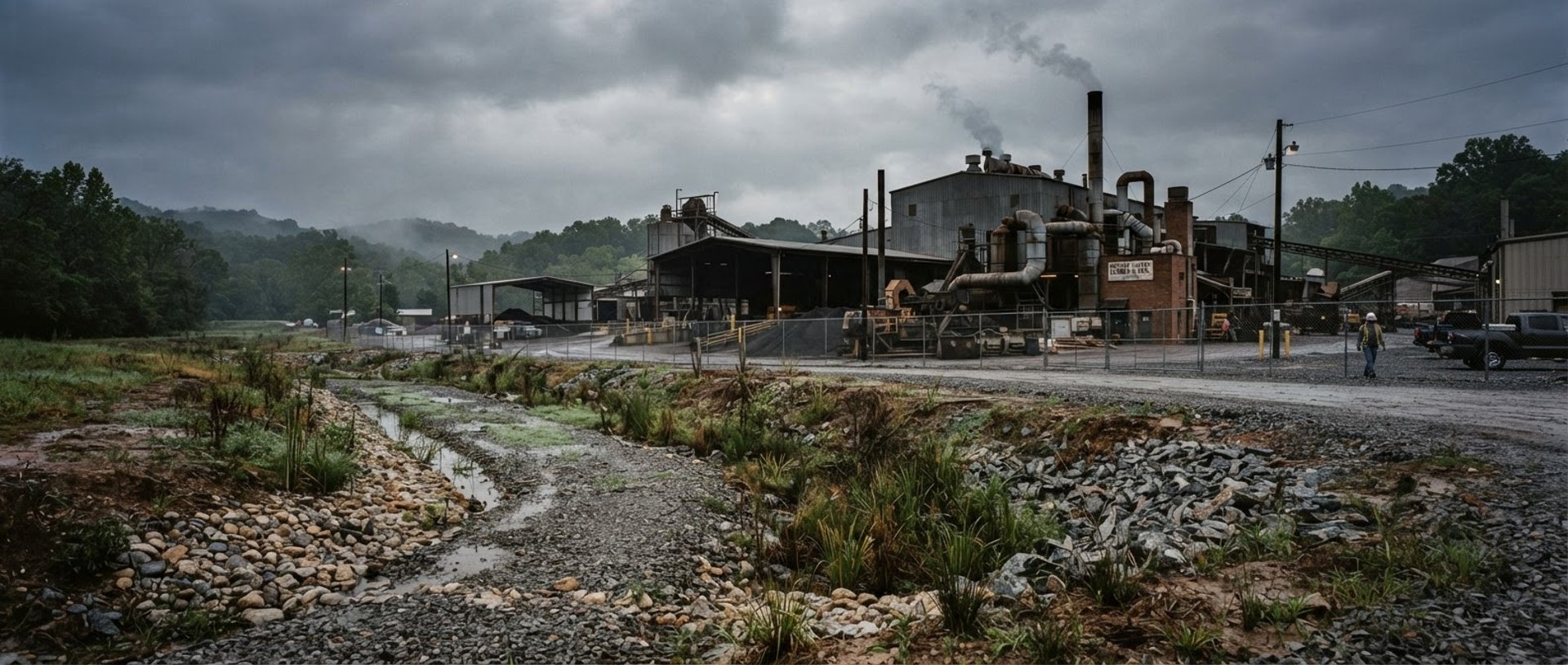
Cooperative runoff mitigation for mills
We engineer high-capacity bioswales and soil-first remediation systems directly alongside active factory sites, protecting local waterways without interrupting production schedules.
The Oconee Mill partnership
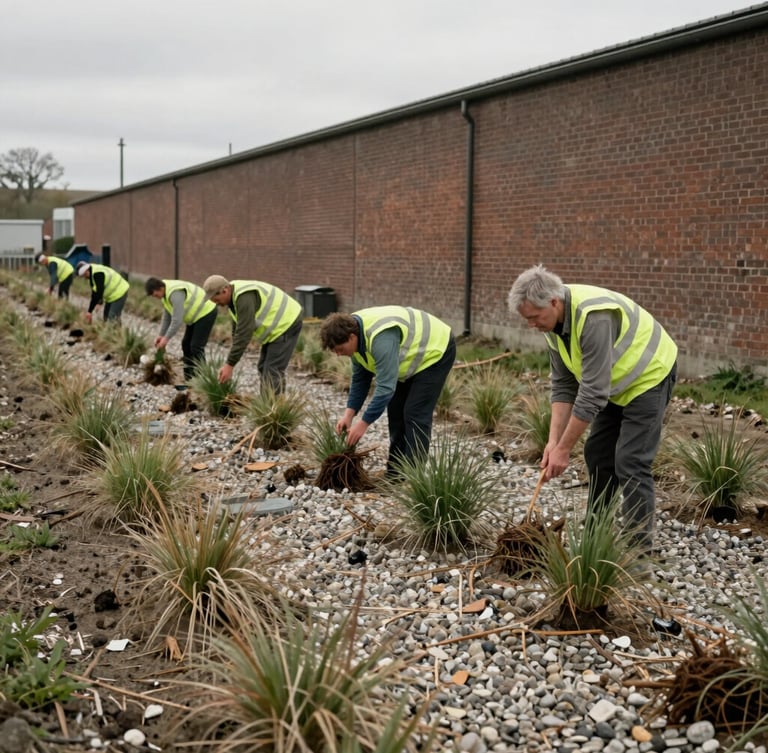
In collaboration with local textile mill managers, we engineered a 400-foot bioswale network. By utilizing native deep-root clay vegetation and engineered gravel layers, we neutralized 84% of chemical runoff before it reached the river.
This project proved that environmental remediation does not require operational downtime. Our team handled excavation, planting, and soil-first stabilization during off-peak hours, ensuring zero loss in mill productivity.
Soil-first remediation standards
Our systems are built to meet rigorous engineering criteria, ensuring reliable performance under peak industrial loads.
Engineered Bioswales
Soil-First Remediation
On-the-Ground Metrics
Multi-tiered gravel and clay filtration channels designed to handle up to 50,000 gallons of industrial runoff daily.
Targeted microbial inoculation that binds heavy metals and neutralizes chemical compounds directly at the discharge source.
Continuous automated soil and water testing protocols providing clear, verifiable ecological health data to municipal planners.
Initiate a site assessment
Our technical team evaluates your facility's runoff profile and designs a customized, non-disruptive remediation plan tailored to your operational constraints.
Oconee Land Alliance
Cross-sector land restoration and runoff mitigation.
Sectors
Home
Projects
About
Contact
Collaborate
7845455154
© 2026 Oconee Land Alliance-Cooperative ecology in the Oconee Valley.
ON-THE-GROUND METRICS